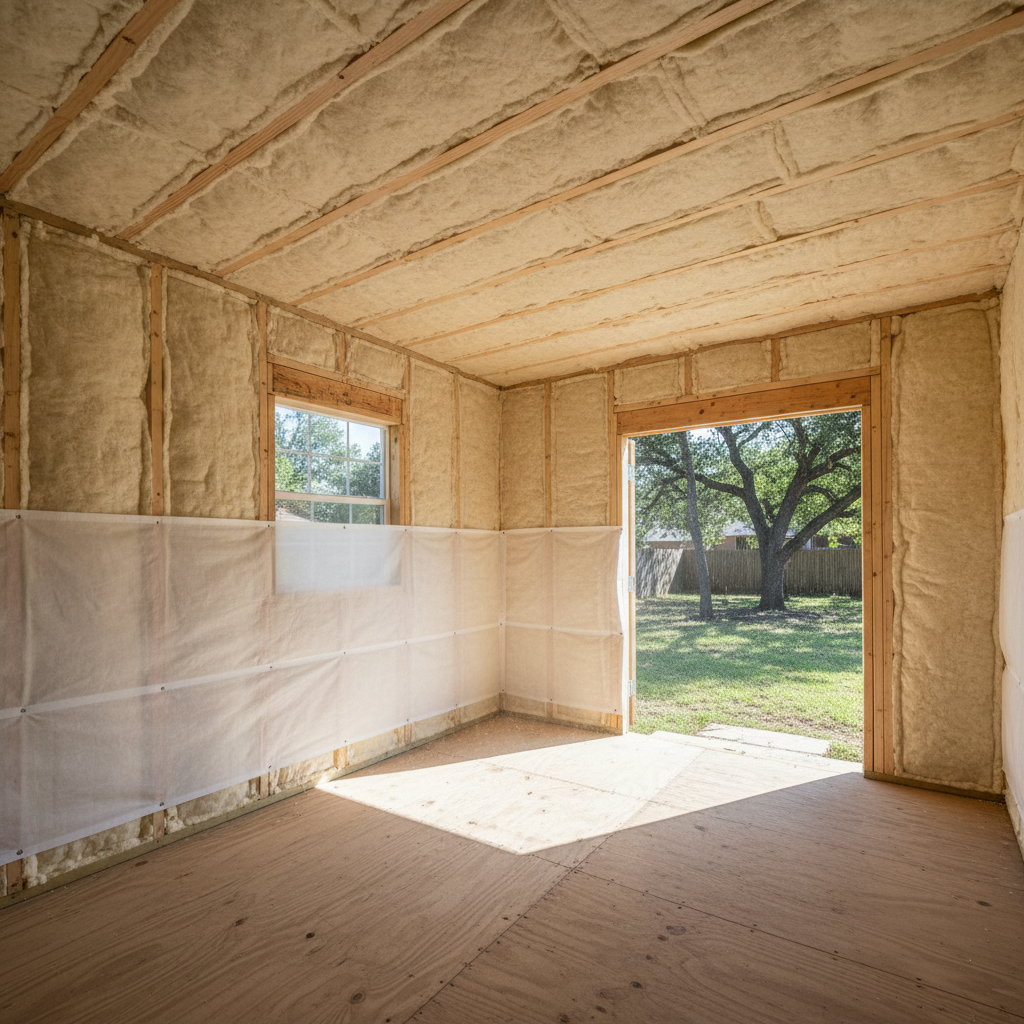
Alright, let's talk about sheds. You've either got one, or you're planning on getting one, and you're probably thinking about insulating it. That's a smart move. Whether it's going to be a workshop, a home office, or just a place to keep your tools from melting in our August heat, insulation really does make a huge difference. But I’ve seen a lot of folks right here in Round Rock make some pretty common mistakes when they try to insulate their sheds, and I want to help you steer clear of them.
Mistake #1: Not Thinking About the Foundation (or What's Underneath)
This is a big one, especially with all the clay we have around Brushy Creek. Lots of sheds just sit on concrete blocks or a basic slab. People forget that heat and cold don't only come through the walls and roof; they also come up from the ground! If your shed isn't properly elevated, and you don't think about a vapor barrier or skirting, you're fighting a losing battle. You'll end up with moisture problems, and all that cool air you're trying to keep inside during the summer will just seep out through the floor. It's kind of like trying to fill a bucket that has a hole in the bottom.
Mistake #2: Going Too Cheap on Materials
I get it, we all want to save a buck. Who doesn't? But when it comes to insulation, 'cheap' often means 'it won't work well' or 'it won't last.' I've seen folks just throw up thin, inexpensive fiberglass batts without a proper vapor barrier, especially if they aren't planning to finish the interior walls. Or maybe they'll use some kind of bubble wrap insulation that promises the world but doesn't really deliver much in terms of actual R-value. Your shed is going to face some serious Texas heat and those occasional cold snaps, you know? You need materials that can really stand up to that. Don't skimp on R-value, and make sure whatever you get can handle moisture, too. Moldy insulation is, frankly, worse than having no insulation at all.
Mistake #3: Ignoring Ventilation
This point really connects with the moisture problem. You could insulate your shed perfectly, but if you don't have enough ventilation, you're just going to trap humidity. And what happens with humidity? Condensation, mold, mildew, and a space that's generally uncomfortable and unhealthy. Even if you're not heating or cooling it, a well-ventilated shed helps keep the temperature steady and things dry. Think about ridge vents, soffit vents, or even a small exhaust fan if you're going to spend a lot of time out there. It's not just about keeping the heat out; it's about managing the air inside.
Mistake #4: DIYing Without the Right Knowledge (or Tools)
Look, I'm a big fan of DIY. I've built plenty of things myself over the years. But insulation, especially in a small, often oddly-shaped space like a shed, isn't always as simple as it looks on YouTube. Cutting insulation correctly, fitting it snugly without squishing it (which makes it less effective), dealing with electrical outlets, and making sure a vapor barrier is installed right takes a bit of know-how. I've seen gaps, compressed batts, and vapor barriers put on the wrong side. These kinds of mistakes can really cut down on how well your insulation works. If you're not confident, it's worth having a pro at least give you advice, or even handle the trickier parts. Sometimes, trying to save a few bucks ends up costing you more in wasted materials or having to redo it later. What a headache!
Mistake #5: Not Sealing Air Leaks First
This is probably the biggest thing people overlook. You can put in the best insulation money can buy, but if your shed has air leaks, you're just throwing money out the window. Think about it: cracks around windows, gaps where walls meet the floor or roof, doors that aren't sealed well. These are like having open windows, letting your conditioned air escape and unconditioned air rush in. Before you even think about insulation, grab a can of spray foam, some caulk, and seal up every crack and crevice you can find. It's foundational work, and it makes your insulation work so much harder and more efficiently. We see this all the time, even in homes, but it's especially important in sheds where construction might not be as tight.
Mistake #6: Forgetting the Door and Windows
Your shed door and any windows are major weak spots, no two ways about it. People insulate the walls and roof beautifully, then completely forget that a flimsy, uninsulated door or a single-pane window is a massive thermal bridge. If you're serious about making your shed comfortable, you need to either swap these out for insulated versions or add insulation and weatherstripping to the ones you already have. A solid core door with some rigid foam insulation glued to the inside, plus good weatherstripping, makes a world of difference. Same goes for windows – consider double-pane or at least adding some heavy curtains or blinds.
Insulating your shed is a smart investment, but only if you do it correctly. Don't fall into these common traps. Think about the whole system: the foundation, the materials, ventilation, sealing, and those often-forgotten doors and windows. If you're scratching your head or just want to make sure it's done right the first time, give us a shout at Elite Insulation Company. We're right here in Round Rock, and we've helped plenty of folks get their sheds comfortable and energy-efficient.