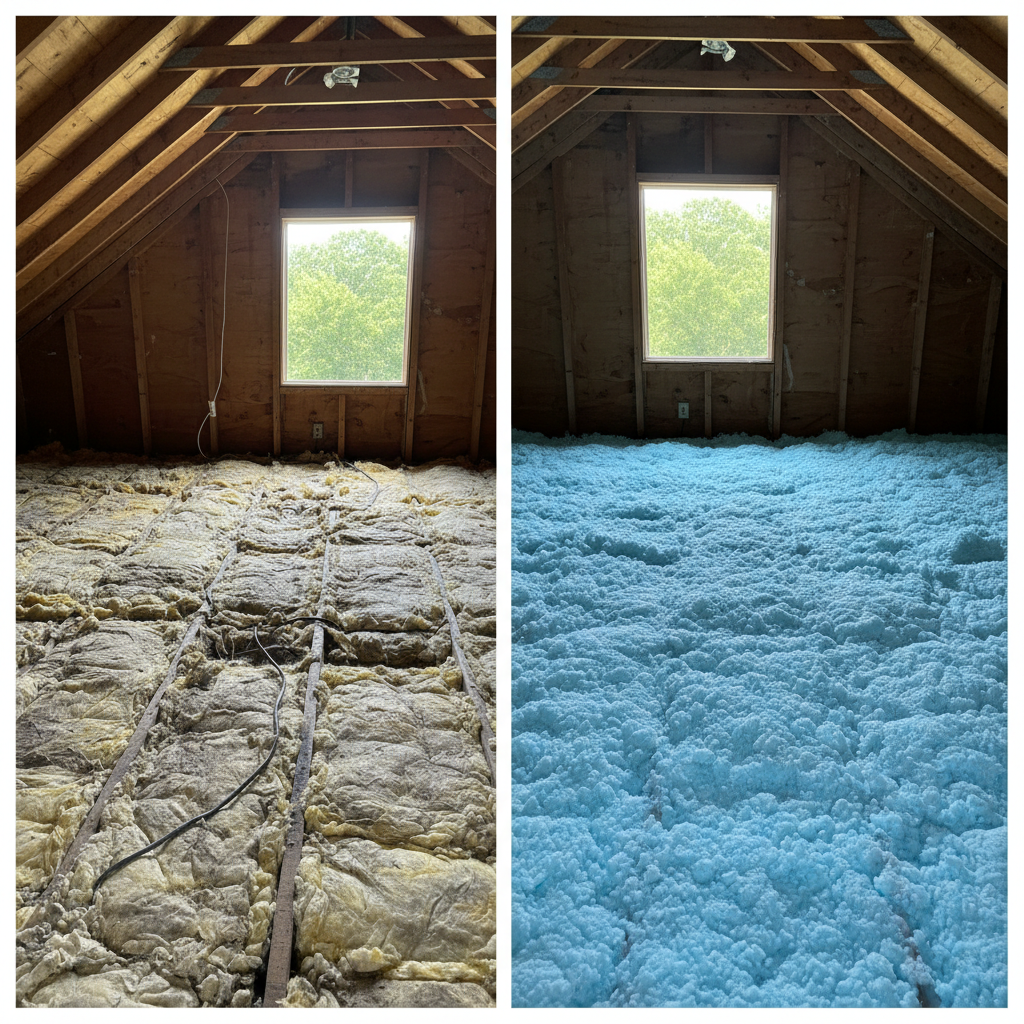
Walking into an attic in Round Rock, TX in July feels like stepping inside an oven. Anyone living in Central Texas knows how brutal the summer season gets. The air conditioning system works overtime, and the attic is ground zero for heat gain. When homeowners call Elite Insulation Company to discuss upgrading their attic insulation, the discussion always comes down to two choices: traditional blown-in cellulose or spray foam insulation.
The Case for Blown-In Insulation
Blown-in cellulose insulation is what you will find in most homes across neighborhoods like Fern Bluff or Lake Creek. It is affordable, fast to install, and does a solid job of slowing down heat transfer. Our team blows the cellulose insulation in loose, filling every nook and cranny over your drywall ceiling.
The upfront cost is much lower than spray foam insulation. If you are on a tighter budget or plan to sell your house in a few years, blown-in cellulose insulation is usually the route that makes financial sense. It has decent R-value per inch, but it will not stop air leaks on its own. Over time, blown-in cellulose insulation can settle a bit, which means you might need to top it off down the road.
Why Spray Foam Insulation Changes Things
Spray foam insulation is a whole different material. It expands to seal every single crack, gap, and seam in your roof deck. That creates a tight thermal envelope. In our climate, keeping outside air out is half the battle. With spray foam insulation, your attic stays much closer to your home indoor temperature instead of baking at 140 degrees.
Homeowners have two choices here: open-cell spray foam and closed-cell spray foam. Open-cell spray foam is lighter and cheaper, while closed-cell spray foam adds structural rigidity and a moisture barrier. The downside is that the price tag is steep. Spray foam insulation costs significantly more upfront than blown-in material.
Comparing Cost and Durability
Blown-in insulation usually runs a fraction of the cost of spray foam insulation installation. You get great thermal resistance for a modest investment.
Spray foam insulation lasts practically forever without degrading or settling. It does not absorb moisture the same way cellulose insulation can if you ever develop a minor roof leak during those sudden downpours we get in Williamson County. But because spray foam insulation seals things up so tightly, your roof deck needs to be inspected to make sure proper ventilation design is maintained.
Making the Call for Your Round Rock Home
If you plan on staying in your house for the long haul and want to drop your electric bill as low as possible, spray foam insulation is tough to beat. Spray foam insulation handles our extreme summer heat better than anything else on the market. But if you want a great thermal barrier without emptying your savings account, blown-in cellulose insulation is still a reliable workhorse.
Elite Insulation Company looks at dozens of attics every month around Round Rock, TX. For homes and businesses in Round Rock, Elite Insulation Company provides attic insulation services.